
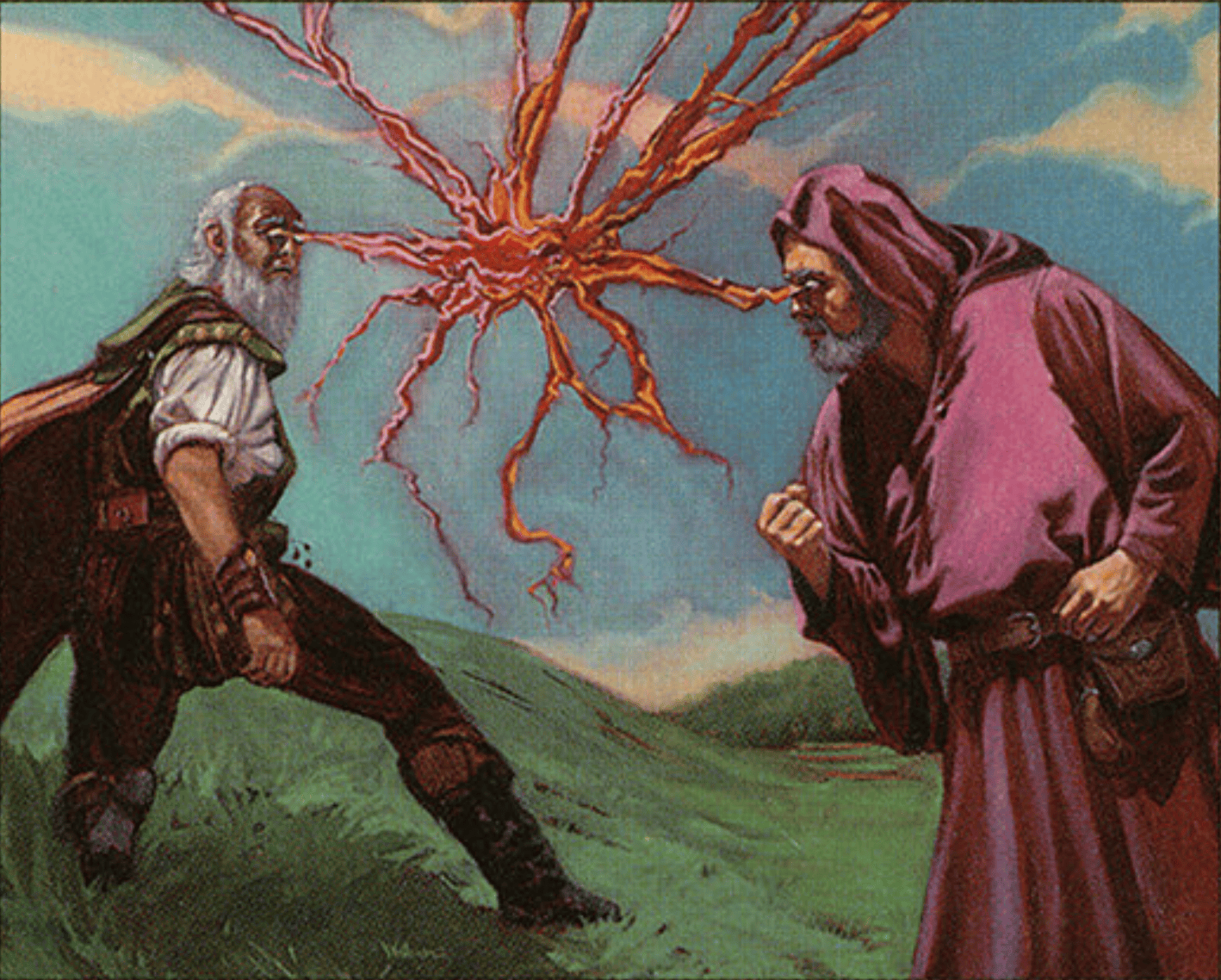
I have the Singapore Nationals playmat rolled up in my bag, and I already know I will be using it again in Tokyo.
Singapore Nationals took place on May 15 and 16, 2027. 51 players showed up. Last year, we were only 28. That kind of jump stops being a local curiosity and becomes the visible edge of something bigger.
I did not secure my invitation there, and I keep thinking about my misplays. But I have to focus on what is coming next in Tokyo.
Tokyo feels like a turning point
Japan Nationals, hosted at Hareruya, is capped at 160 seats. Tickets sold out on the same day they went live, back in early March 2027.
Japan has an enormous pool of competitive players, and Premodern was mostly unknown there until recently, especially before the format was added to Magic Online in late 2025. Once people had a straightforward way to discover the decks and test them consistently, things moved fast. Decklists started circulating. Store nights appeared. Local communities formed. And now Japan Nationals can sell out months before the event.
Seeing it sell out in a day makes one thing obvious: the players were there, waiting for a reason to show up.
What actually pushed the format over the edge
People love single causes. Online play. Content. Nostalgia.
In practice, it was momentum.
Magic Online helped, especially in places where paper Premodern had not taken root yet. But globally, what changed everything was watching the numbers rise again and again. Each new record made the next one easier. Players brought friends. Stores took the risk. Organisers aimed higher. Communities formed across the developed world with growing confidence.
And then the announcement landed at exactly the right time: a World Championship.
That did not replace what Premodern already was for most people. You can still meet friends every couple of weeks at your local store, shuffle up for the love of the cards, and never care about travel or big events.
But if you do want more, the circuit gives you something simple and powerful: a goal, and a clear path to earn your seat.
The World Championship exists, in part, because the Premodern European Masters in Valencia in 2026 proved the appetite was real. The event itself was for qualified players only, but the real story was the season that led into it. Across Europe, people chased those seats with genuine urgency, and the whole year felt connected.
The core idea: the World Championship is not open
Nationals are open tournaments. Anyone can register, anyone can play.
The World Championship is not open. You cannot simply decide to attend. You can only go by qualifying.
In every 2027 National, the top 5% qualifies for the 2028 Premodern World Championship in Madrid. In future editions, the top 10% of the previous World Championship will also qualify for the next one, but that does not apply yet because this is the first edition.
That is what makes it work: a simple, transparent path that everyone understands.
Funding the championship, and the format itself
From every National entry fee, $5 is sent to the World Championship organisation. That money helps cover costs, including prize support.
It also helps the format indirectly, worldwide. Each National sustains itself, and each one also feeds the shared flagship event, which draws more attention, more stores, more organisers, and more new communities into the format.
The World Championship also has sponsors, including established Magic stores and MTG Old Frame, where collectors support Old Frame events. It is proof that this is not a top-down project. It is a community choosing to invest in itself.
Tokyo: 2 days, 12 rounds, and a real shot
Like most Nationals, Tokyo is a 2-day event with 12 Swiss rounds, followed by playoffs using Top 7.2. If the first seed after Swiss also won the last 2 Swiss rounds, they receive a bye in the elimination phase, turning the bracket into an effective Top 7. If that condition is not met, it becomes a normal Top 8.
With 160 players, the top 5% means 8 World Championship invitations.
That is the obvious headline, but it is not the only thing on the line. There are prizes, and there is prestige. Winning a National in Japan, in a country with one of the strongest competitive cultures in the world, is a title that carries weight.
Madrid: April 24 to 26, 2028
The first Premodern World Championship will be held in Madrid from April 24 to 26, 2028.
It is a 3-day championship you can only enter by qualification, with $25,000 in prizes and $10,000 for first place.
The prize pool matters, but it is not the main reason people are building their year around this. Most of us have jobs, families, and responsibilities. We fly across countries because this is the format we love, the era we grew up with, and the community we have built around it.
The structure is built to reduce variance and reward consistency. 16 Swiss rounds is a lot of Magic. It gives you room to recover from a mistake, a mulligan, or a bad pairing, while still demanding sustained performance from anyone who wants to reach Sunday.
Day 1: 8 Swiss rounds
Day 2: 8 more Swiss rounds, for a total of 16
Top 7.2: first seed gets a bye in the elimination phase if they won their last 2 Swiss rounds, otherwise it is a normal Top 8
Sunday: 3 elimination rounds, each best of 5
Top 7.2 matters for 2 reasons. It gives the best Swiss performer more margin once elimination begins, provided they closed Swiss with 2 wins. And it keeps the final Swiss rounds live at the top tables: players in contention have a real incentive to play for the win instead of intentionally drawing, which keeps those rounds meaningful and makes it more engaging to watch.
The weekend is bigger than the championship
Madrid is not only for the qualified players. The World Championship weekend is also a festival, because the side events are open.
You can show up with friends and play all weekend, even if you did not qualify. Beyond the main event, there are plenty of Old Frame side tournaments, especially Premodern itself.
And then there is Rochester draft, running for every block between Urza and Onslaught. It is not only a format, it is theatre: eight players drafting face-up, everyone watching the picks, and the shared suspense of opening packs in public. Sometimes someone hits the foil everyone wants, right there in front of everyone, and the reaction is instant. It takes you back to when you were a kid, when opening a booster in front of your friends felt like a big moment.
Nationals as the backbone
Nationals now run across the Americas, Europe, Asia, and Oceania. Most of them follow the same standard: 12 Swiss rounds and Top 7.2. That consistency makes the circuit legible and makes preparation transferable from one country to another.
This is the part that makes the whole thing feel achievable. A new country does not need to reinvent anything. You build local play. You grow a community. You run the same structure that everyone recognises. Suddenly, you are part of the circuit.
Records, and what it means that Spain set them first
Spain has been setting the pace for attendance records, and Spanish Nationals have consistently pushed the ceiling upward. Valencia reached 411 players in May 2027, and it did not shock anyone. The number had been climbing every year, and the trend was already obvious.
Now the United States is finally ready to answer. United States Nationals is expected to draw 600 participants in 2027. It feels fitting. Magic was born there for a reason, and the scale was always waiting for the moment the circuit became real.
Why people care
One reason is obvious: the cards, the decks, the Old Frame look, and a style of gameplay many of us never stopped loving.
But the deeper reason is social.
Premodern is where you sit down across from friends you have known for 25 years, shuffle up, and feel like you never really left. It is also where you meet new people who share the same passion for old frames and old matchups, and they stop being strangers faster than you expect.
And now, in 2027, there is an additional dream layered on top of all that. Do well at your National. Earn the seat. Show up in Madrid in April 2028, not because you were selected, but because you qualified.
Singapore is behind me, and the mistakes still sting.
But on June 5 and 6, 2027, in Tokyo, I will do what we always do: sit down, shuffle up, and take another shot. Not just at a seat in Madrid, but at being part of the first years of something that finally feels global and scalable.